
Where should bathroom feature wall be
Where should you place your feature wall in the bathroom? It depends!
Smaller bathrooms? Place it opposite the entrance. It’ll create a focal point and make the space look bigger. Plus, it will show off your chosen material or design right away.
Larger bathrooms? More flexibility. Put it behind the bathtub or vanity unit for a dramatic and lux feel. Or pick a side wall to break up any monotony.
Already have a standout architectural element? Let it shine on its own and choose a different wall for the focal point.
Fun Fact: Reclaimed wood or stone on a feature wall can create a calming spa-like atmosphere.
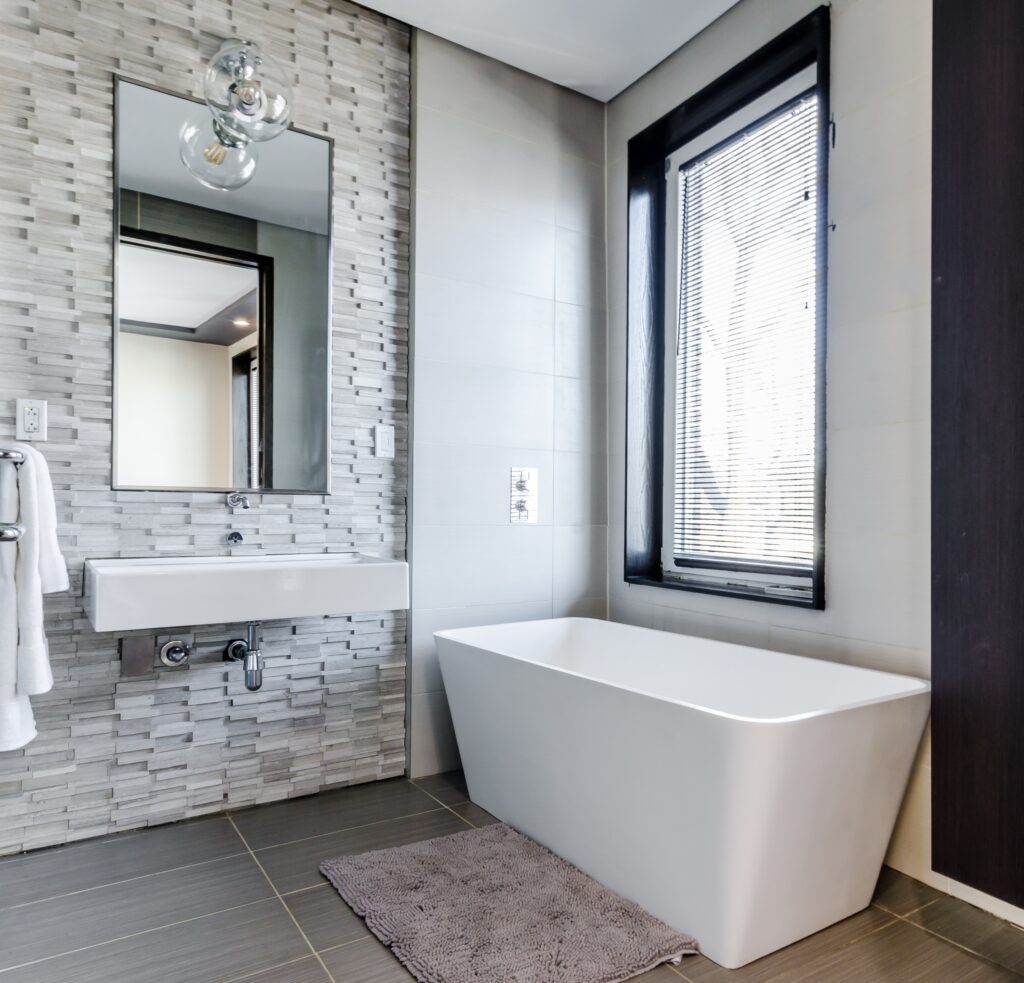
Importance of a bathroom feature wall
The bathroom feature wall is very important in modern interior design. It gives you the chance to be creative and make the space more attractive. Let’s find out why this wall is so special.
- It’s the focal point: A feature wall grabs attention and is the center of the bathroom.
- Adds visual interest: Unique materials, patterns, or colors make the wall deeper and different.
- Shows your style: If you choose bold wallpaper, mosaic tiles, or textured paint, your wall will show your personality.
- Balance and contrast: A feature wall fits well with the other elements in the bathroom and provides a contrast.
- Instantly change the look: With little effort and cost, your bathroom can look different with a feature wall.
- Sets the mood: Color on the wall can make the bathroom inviting or energizing.
It’s not only interesting, but it’s also practical. Materials used are often moisture resistant and easy to clean. They also reduce condensation in damp places.
Let’s remember how this tradition started. In Ancient Egypt and Rome, influential people decorated their walls with beautiful mosaics and frescoes. This trend spread to other cultures, as people realized it could make plain spaces into works of art.
Considerations for choosing the location of a bathroom feature wall
Where to put a feature wall in the bathroom? It’s an important decision! Here are some tips to consider:
- Look at the size and layout of the bathroom – do you want the wall to be a prominent feature or a subtle accent?
- Make sure it won’t interfere with any existing plumbing or fixtures.
- Where is the natural light coming from? Place the wall near windows to create a play of light and shadow.
- Consider your daily routine – if you spend time at the vanity area, place the wall there.
- Think about the design themes; use materials, patterns, and colors that will work with other elements in the space.
- Be aware of how different materials react in humid conditions – some may not be suitable near showers.

Factors to consider when selecting materials for a bathroom feature wall
Durability: For the bathroom’s feature wall, materials that are resilient to moisture and humidity must be chosen.
Aesthetic Appeal: Consider colour, texture, and pattern to create a unified look that adds to the bathroom’s atmosphere.
Maintain: Select materials that can be easily kept clean for a hygienic environment.
Budget: Balance cost and quality by accounting for financial limits.
Natural Stones: Marble or granite can add a luxurious feel.
Average Cost: HomeAdvisor.com states that typically in the UK, £2,500-£6,000 is spent on bathroom renovations.
Step-by-step guide on where to place a bathroom feature wall
A bathroom feature wall can be strategically placed to make the whole bathroom look and feel amazing. Here is a step-by-step guide on where to put your feature wall, so it stands out!
- Layout: Think about the layout of your bathroom before deciding where to place the feature wall. Find the wall that will grab attention and make an impact. This could be the wall opposite the entrance or the longest wall.
- Functional area: Pick a wall next to a functional area such as a vanity or bathtub. Put the feature wall here, to highlight that space and create a unified design.
- Fixtures: Match your feature wall with existing fixtures and fittings. Do this by choosing a colour or pattern that goes with or contrasts the elements. This will make the space look balanced.
- Lighting: Think about how lighting will affect the feature wall. If your bathroom has natural light, choose a wall that will show off its unique features during the day.
Remember that every bathroom is unique. Change these guidelines according to your needs and interests.
Now you know how to place a bathroom feature wall. So, why wait? Make your bathroom a stylish paradise by following these steps. Don’t miss out on the chance to add personality and style to one of the most used rooms in your home. Your beautiful feature wall can now be created!
Tips for enhancing the impact of a bathroom feature wall
Positioning a bathroom feature wall can really increase the feel of the space. Here are some ideas to consider:
- Contrasting colours – Feature walls in bathrooms offer depth and visual appeal. Pick colours that fit with the room, while adding contrast.
- Textures – Enhance the feature wall by working in different textures such as stone, wood, or wallpaper with patterns.
- Architectural elements – Highlight special elements like exposed brick or beams by making them a feature wall.
- Artwork or mirrors – Place artwork or mirrors on the feature wall to draw attention and add class.
- Lighting – Add spotlights or sconces to light up certain areas and create drama.
When choosing a feature wall, think about the size and layout of the bathroom. Make sure existing fixtures and fittings won’t interfere with the feature wall impact.
Interest in feature walls is on the rise. A Houzz UK survey showed 72% of people who renovated their bathrooms included a feature wall.
Conclusion
Drawing a conclusion requires careful thought. The bathroom feature wall should be placed strategically to add to the space’s overall look and function. Factors like size, layout, ambiance, and fixture style must be taken into account.
One must think about the purpose of the wall. Is it to add texture or pattern, create a focal point, or simply match existing design elements? Placing it behind or next to the bathtub or vanity can draw attention and create visual interest.
The material used for the wall affects its placement. For example, tile designs look best on walls that are visible upon entering the bathroom. Wooden walls, though, should be in an area that is not exposed to moisture.
A homeowner made their small bathroom into a spa-like sanctuary. They put a glass mosaic feature wall behind the freestanding bathtub. This created the illusion of depth and made the space feel bigger. They could now bathe while surrounded by an eye-catching focal point.
Frequently Asked Questions
Q: Where should the bathroom feature wall be?
A: The bathroom feature wall is typically placed behind the vanity or bathtub to create a focal point and enhance the overall design of the space.
Q: Can the bathroom feature wall be in a different color from the rest of the walls?
A: Absolutely! Choosing a different color or pattern for your bathroom feature wall can add visual interest and make it stand out from the surrounding walls.
Q: What materials can be used for a bathroom feature wall?
A: There are various materials you can use for a bathroom feature wall, such as tiles, wallpaper, reclaimed wood, stone, or even a painted accent wall.
Q: Should the bathroom feature wall match the rest of the bathroom decor?
A: It depends on your design preferences. Matching the feature wall with the rest of the bathroom decor can create a cohesive look, while contrasting can add a bold and dramatic touch.
Q: How can I make the bathroom feature wall stand out?
A: To make the bathroom feature wall stand out, consider using a different texture, pattern, or material. You can also install unique fixtures or add accent lighting to highlight the wall.
Q: Is it necessary to have a feature wall in the bathroom?
A: No, having a feature wall in the bathroom is not a requirement. It is purely a design choice to enhance the aesthetic appeal and create a focal point within the space.


