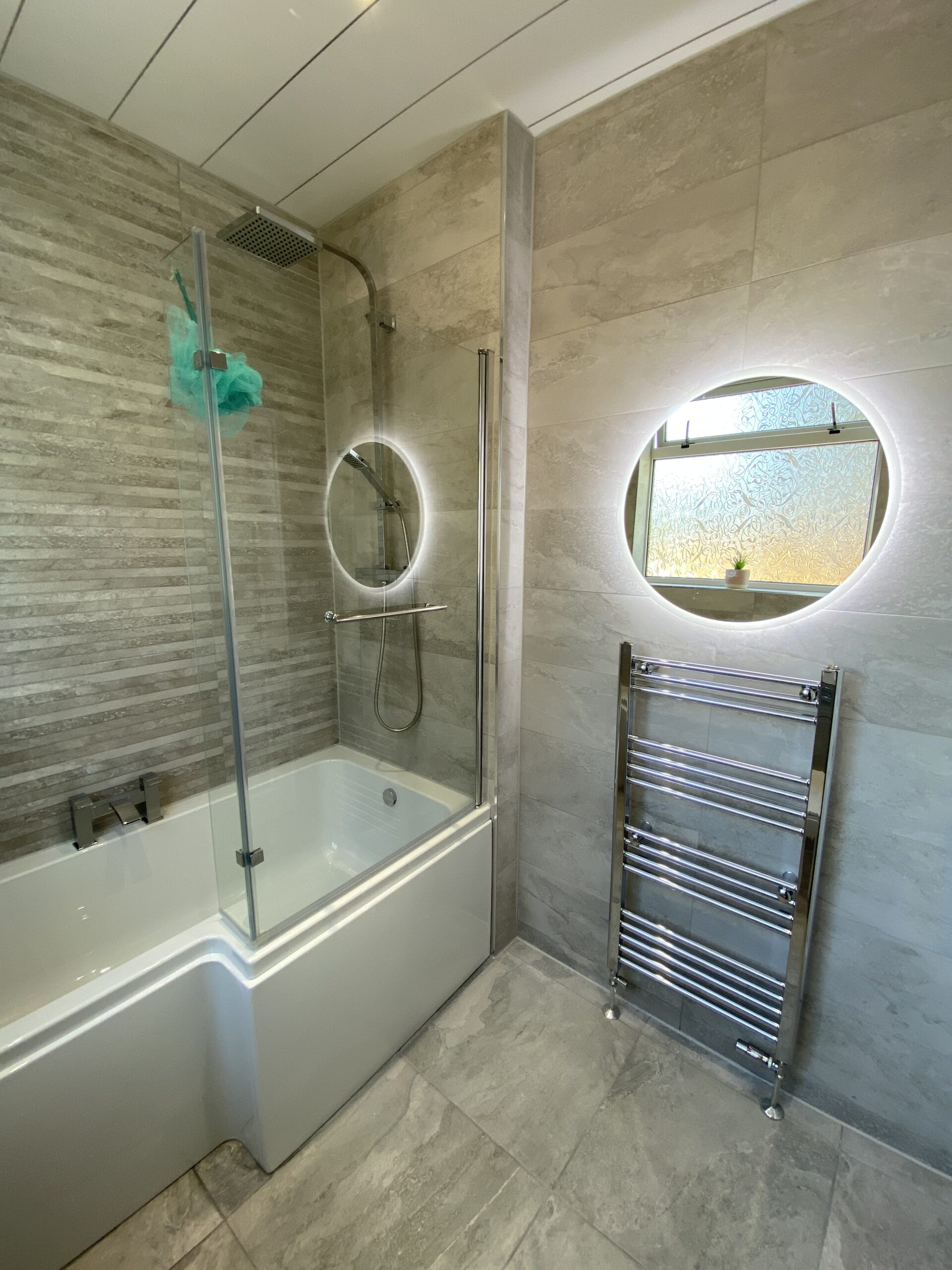
What Type of Bathroom Floor Tile is The Most Durable?
Because it is one of the high-traffic areas in the house, the bathroom requires flooring that can endure water, regular cleaning, and the passage of time. Bathroom floor tiles are frequently walked on, so it’s important to choose ones that can withstand heavy foot traffic. In this blog post, we will investigate several types of bathroom floor tiles and highlight the most durable solutions to ensure a long-lasting and visually beautiful flooring solution for your bathroom. We will help you decide on a great choice!
Porcelain Tiles
Porcelain tiles, like ceramic ones, come in a wide range of colours, shapes, and sizes. In contrast to their ceramic counterparts, however, their colour and pattern permeate the entire object. This flooring option is more durable, stain- and water-resistant, and chip- and scratch-proof than ceramic tiles due to their higher hardness and density. On the negative side, this also makes porcelain bathroom floor tiles more expensive than ceramic tiles.
Cleaning porcelain tiles is the same as cleaning any other type of tile, and they require no particular care.
Ceramic Tiles
Most contemporary bathroom floors are tiled with ceramics made from red, brown, or white clay. Ceramic bathroom floor tiles are solid and nonporous because they are fired in a kiln and then finished with glazing, and they are also slip, stain, and fire resistant. That’s right, they’re completely low-maintenance and perfect for the damp conditions of a bathroom floor.
Available in a range of finishes including polished, semi-finished, matte, satin, and glossy, perhaps the only downside connected with ceramic floor tiles is that they are prone to wear if subject to excessive usage. Because of this, they are best used in locations with low to moderate foot activity, such as bathrooms.
Natural Stone Tiles
While natural stone tiles, such as marble, granite, and slate, offer timeless elegance, they are generally more porous than ceramic or porcelain tiles. However, when sealed properly, natural stone tiles can be a durable and luxurious option for bathroom flooring. Keep in mind that certain types of natural stone may require more maintenance to preserve their beauty and longevity.
Plastic Laminate Tiles
If you’re doing some renovating, plastic laminate tiles (often sold as planks) are another great option. The tiles don’t add much height to the floor, so it’s easy to plan transitions between rooms, much like the laminate material that covered kitchen worktops for a generation or two.
Laminate, while sturdy and simple to clean, is not water-resistant. This tile may be better suited for a half-bath than a full-bath because prolonged exposure to water can cause the fiberboard core to swell and buckle. Caulking the spaces between the laminate and the walls, the toilet, and the tub (in a full bathroom) is essential for keeping water out. Another drawback is that there isn’t as much design variety with laminates as there is with ceramics and vinyl.
Glass Tile
Glass floor tiles look great for more than one reason. An attractive stained-glass look can be achieved by covering a section of the floor in a thin coating of glass. As long as you use floor-rated tile and textured glass, this type of tile stands up well once it’s installed properly. Slip resistance is another benefit of using little glass tiles with a lot of grout joints. This can be the best tile flooring if you are looking for something with both durability and aesthetics.
Vinyl Tiles
Due to its low price and great degree of practicality, vinyl is the most preferred tile option for bathrooms. It works as well in either the master or guest bathroom or even the guest powder room. When compared to other popular options, it is far superior in terms of security, comfort, and longevity. Top vinyl tile producers have also made great strides in improving the tiles’ visual attractiveness and making them easier to install. The material sticks to itself and may be easily trimmed with a regular knife.
Cork Tiles
Cork flooring is soft underfoot and comes in a rainbow of colour options for the tiles. Although finished tiles make glue-down installation easier, you should still plan on applying numerous coats of polyurethane to seal the flooring and prevent moisture from reaching the subfloor. The most common method for installing cork tiles is using a troweled-on glue, although there are alternative click-in-place floating floor options available.
Consult With Bathrooms Scotland For The Best Bathroom Flooring For You
Selecting the most long-lasting and the best type of tile for your bathroom floor requires thinking about things like its resistance to water, its hardness, and how much upkeep it will need. While there are benefits and drawbacks to using any tile material, ceramic and porcelain tiles stand out as the best options due to their longevity, resistance to water, and adaptability to a wide range of design options. Ultimately, the greatest pick relies on your budget, personal taste, and the precise needs of your bathroom. Making a well-informed choice will guarantee that your bathroom floor will last for years to come and look great while doing so.
It’s a good idea to consult with Bathrooms Scotland for a better and more informed decision!


